Germany
Car Market 2026
Complete guide to German vehicle prices, KFZ-Steuer, insurance by Bundesland, Umweltzonen, EV adoption, and total cost of ownership — backed by real 2026 KBA and ADAC data.
German Auto Market Overview 2026
Europe's largest car market and global automotive heartland
Germany is Europe's largest automotive market and the world's fourth-largest by annual sales, with approximately 2.85 million new vehicles registered in 2026. As the home of Volkswagen, BMW, Mercedes-Benz, Audi, and Porsche, Germany has an unparalleled relationship with the automobile — the car industry employs over 800,000 people directly and contributes approximately 5% of GDP.
Total registered vehicles in Germany stand at approximately 49 million, giving a vehicle ownership rate of 580 per 1,000 people. The market is uniquely dominated by domestic premium brands — BMW, Mercedes-Benz, Audi, and Volkswagen Group collectively account for over 55% of new registrations. SUVs and crossovers have overtaken traditional saloons and hatchbacks, now representing 48% of new sales.
Germany's EV transition has been turbulent — after leading Europe in 2022, the abrupt end of the Umweltbonus subsidy in December 2023 caused a sharp sales drop in 2024. Recovery is underway in 2026, with EV share recovering to 19.2% as prices fall and charging infrastructure expands. The government's 2035 ICE ban target (aligned with EU) is driving long-term structural change.
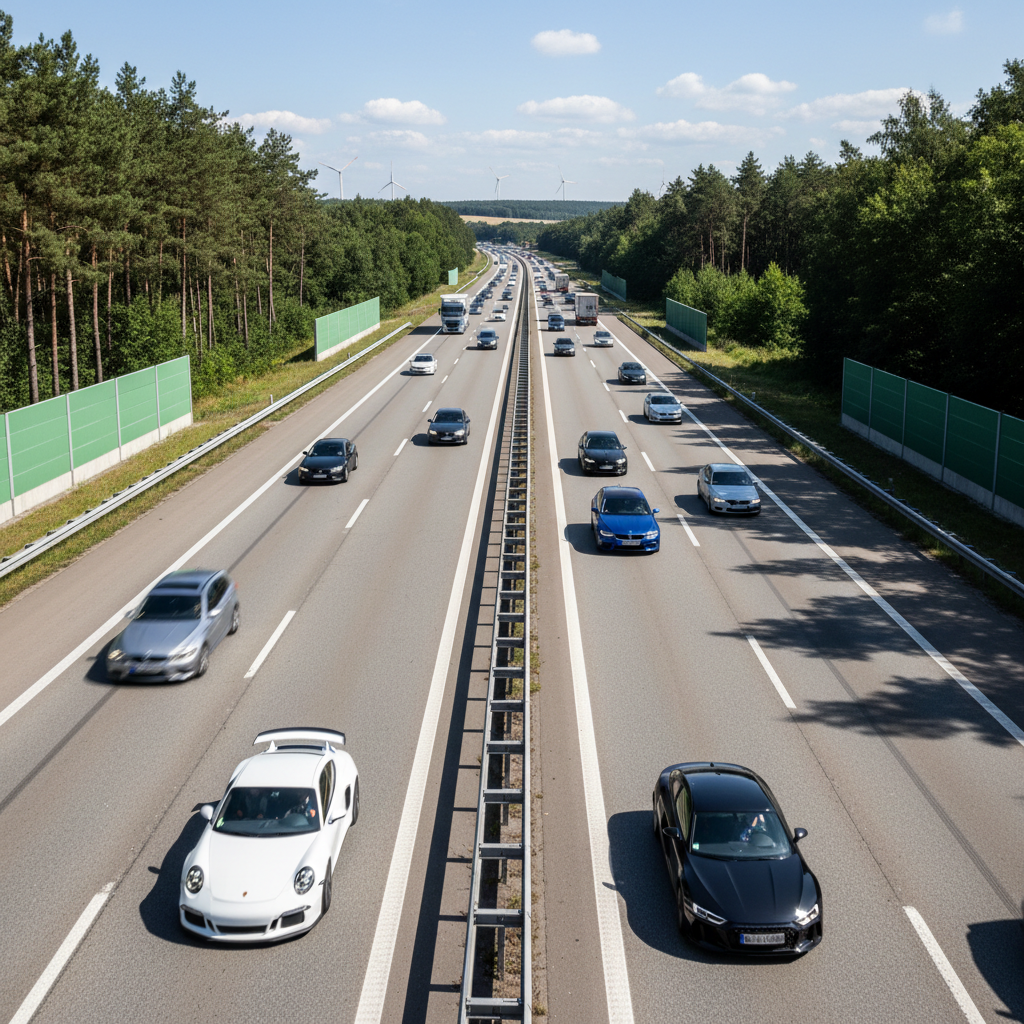
Autobahn Speed Limit Debate
Germany remains the only major country without a general motorway speed limit — approximately 30% of the Autobahn has no speed restriction. This unique feature influences car purchasing decisions, with Germans disproportionately buying high-performance vehicles. The ongoing debate about introducing a 130 km/h limit (for safety and emissions reasons) continues to divide public opinion.
New Car Prices by Brand — 2026 (EUR)
Average transaction price across all models
Most Popular Models in Germany — 2026
Top 10 by annual registrations
| # | Model | Category | Base Price | 2026 Sales | Details |
|---|---|---|---|---|---|
| 1 | Volkswagen Golf | Hatchback | €28,990 | 98,400 | View → |
| 2 | Tesla Model Y | EV SUV | €44,990 | 72,600 | View → |
| 3 | Volkswagen Tiguan | SUV | €35,490 | 68,200 | View → |
| 4 | BMW 3 Series | Saloon | €44,900 | 58,400 | View → |
| 5 | Mercedes C-Class | Saloon | €48,900 | 54,800 | View → |
| 6 | Skoda Octavia | Hatchback | €24,990 | 52,200 | View → |
| 7 | Audi A4 | Saloon | €42,900 | 48,600 | View → |
| 8 | Volkswagen Polo | Hatchback | €20,990 | 46,800 | View → |
| 9 | Opel Corsa | Hatchback | €18,990 | 44,200 | View → |
| 10 | Hyundai Tucson | SUV | €30,490 | 40,600 | View → |
Annual Cost of Ownership Breakdown
Average for a new mid-range vehicle in Germany — 2026
Total average annual ownership cost (ADAC 2026)
Appreciation & Depreciation — German Market
5-year value retention data for popular German-market models
📉 Fastest Depreciating (5yr value retained)
| Model | 5yr Retention | Notes |
|---|---|---|
| Volkswagen Golf | 55% | Consistent demand; GTI/R hold better than base |
| BMW 3 Series | 50% | Premium badge; M Sport variants retain more value |
| Tesla Model 3 | 42% | Rapid price cuts by Tesla hurt used values |
| Mercedes C-Class | 48% | AMG versions depreciate less; diesel holds better |
| Opel Corsa | 45% | Budget segment; high supply depresses values |
📈 Best Value Retention / Appreciation (5yr)
| Model | 5yr Change | Notes |
|---|---|---|
| Porsche 911 GT3 | +25% | Allocation cars; enthusiast demand drives premiums |
| Mercedes G-Class | +15% | Iconic status; long waiting lists support values |
| BMW M3 Competition | +8% | Limited production; manual variants especially sought |
| Volkswagen Golf GTI Mk8 | +5% | Strong enthusiast following; limited supply |
| Porsche Taycan Turbo S | +6% | EV performance flagship; strong brand retention |
Car Insurance Costs by Bundesland — 2026
Average annual comprehensive premium (Vollkasko)
Urban density, high theft, port city risks
SF-Klasse system rewards safe drivers
Rural, low traffic density, few claims
Fuel Cost Impact — Petrol vs EV by Region
Annual fuel/charging cost comparison — 15,000 km/year
Petrol Price Breakdown (2026)
EV Charging Cost Breakdown
EV Adoption in Germany
Battery electric vehicle market share growth
| Incentive / Policy | Value | Eligibility |
|---|---|---|
| Umweltbonus (Federal EV Grant) | Ended Dec 2023 | Was up to €6,750 for BEVs; discontinued due to budget constraints |
| KFZ-Steuer Exemption | €0 road tax until 2030 | All battery electric vehicles registered before 2030 |
| Company Car BIK Reduction | 0.25% vs 1% monthly | EVs listed under €60,000; significant tax saving for company car drivers |
| State-Level Incentives | Varies by Bundesland | Some states offer additional grants; check local Wirtschaftsministerium |
| Wallbox Grant (KfW) | Ended 2022 | Federal home charger grant discontinued; some utility company schemes remain |
| THG-Prämie (Carbon Credit) | €50–€400/yr | EV owners can sell their CO2 quota to fuel companies; market-rate payment |
Import & Export Overview
Germany's vehicle trade flows and tariff structure
Germany's Export Powerhouse
Germany is the world's second-largest car exporter (after Japan), exporting approximately 3.5 million vehicles annually worth over €130 billion.
Import Tariffs (EU Standard)
Full German Tax & Fee Breakdown
National taxes, KFZ-Steuer, and city-level charges
National Taxes & Fees
| Tax / Fee | Rate | Notes |
|---|---|---|
| VAT (MwSt) on New Vehicles | 19% | Standard German VAT; included in advertised price |
| KFZ-Steuer (Vehicle Tax) | €2–€9.50/100cc | Based on engine displacement and CO2; EVs exempt until 2030 |
| CO2-based surcharge | €2/g CO2 over 95g/km | Progressive surcharge for high-emission vehicles |
| Zulassungsgebühr (Registration) | €26–€60 | One-time fee at vehicle registration |
| TÜV Inspection | €80–€150 every 2 yrs | Mandatory roadworthiness test; first at 3 years |
| Kraftfahrzeugsteuer (Road Tax) | €0–€500+/yr | Annual tax based on engine size and emissions |
| Umweltbonus (EV Bonus) | Ended Dec 2023 | Government EV subsidy of up to €6,750 was discontinued |
| Dienstwagen BIK (Company Car) | 0.25–1% of list price/mo | EVs: 0.25%; PHEVs: 0.5%; ICE: 1% monthly benefit-in-kind |
| Autobahn Toll (Trucks) | N/A for private cars | No toll for private passenger cars on German motorways |
| Umweltzone Sticker | €5–€10 one-time | Green sticker required for low-emission zones in cities |
| Parking (city centres) | €1–€4/hour | Varies by city; Munich and Frankfurt most expensive |
| Fuel Tax (Energiesteuer) | €0.6545/litre petrol | Plus 19% VAT on top of fuel price |
City-Level Charges
| City | VAT | Reg Fee | Notes |
|---|---|---|---|
| Munich | 19% MwSt | €26–€60 | Umweltzone: green sticker required; highest parking costs in Germany |
| Berlin | 19% MwSt | €26–€60 | Umweltzone covers most of inner city; congestion pricing under discussion |
| Hamburg | 19% MwSt | €26–€60 | Umweltzone active; HVV public transport strong alternative |
| Frankfurt | 19% MwSt | €26–€60 | Umweltzone; high parking costs in financial district |
| Cologne | 19% MwSt | €26–€60 | Umweltzone; Rhine crossing toll for some routes |
| Stuttgart | 19% MwSt | €26–€60 | Feinstaubalarm (fine dust alert) driving bans on high-pollution days |
| Düsseldorf | 19% MwSt | €26–€60 | Umweltzone; Rhine port city with industrial traffic |
German Car Buying Guide 2026
New vs used, best timing, and financing options
New vs Used
Best Time to Buy in Germany
German Car Market FAQs
Common questions about buying and owning a car in Germany